

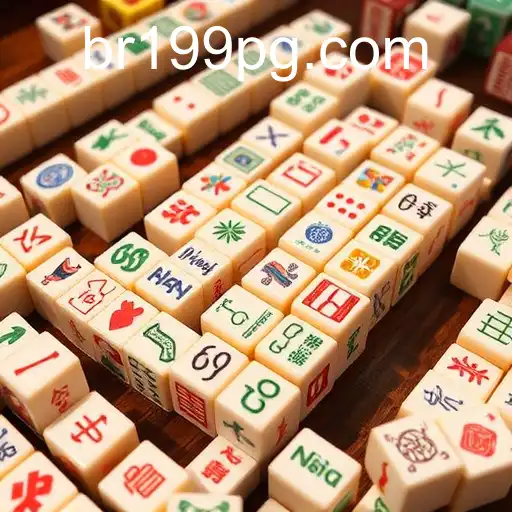

Mahjong, a game that has captivated millions across the globe, not only serves as a beloved pastime but also reflects a rich tapestry of cultural and historical layers. With its complex gameplay and beautiful tiles, Mahjong is much more than just a game; it is a deep-seated tradition that continues to be a vibrant part of various cultures.
The origins of Mahjong are shrouded in mystery, with multiple theories suggesting its inception. One widely accepted view is that Mahjong originated in China during the Qing Dynasty in the mid-19th century. It is believed to have evolved from earlier card games and gained widespread popularity across China. As the game spread, so did its variations, adapting to reflect regional traits and preferences.t89.com
To appreciate Mahjong, one must first understand its fundamental components. The game is traditionally played with a set of 144 tiles, which are categorized into suits, honors, and bonus tiles. The primary suits include the Bamboos, Characters, and Dots. Additionally, there are Wind and Dragon tiles, which add strategic depth to the game.166br
The objective of Mahjong is to collect sets and pairs of tiles that match. A Mahjong hand is typically made up of four sets of three tiles and a pair. Players draw and discard tiles in turns to complete their hands, all while paying close attention to the moves of others to anticipate their strategies.
As Mahjong's allure grew, it transcended borders, reaching countries like Japan, the United States, and various Southeast Asian nations. Each region developed its own style and rules, tailoring the game to fit local cultures. Japanese Mahjong, also known as Riichi Mahjong, for example, has distinct scoring systems and tile sets. Likewise, in the Western world, Mahjong gained popularity as a leisure activity among expatriate communities and beyond.1kmk
In America, Mahjong saw a surge in the early 20th century, becoming particularly popular among Jewish communities. The formation of the National Mah Jongg League in the 1930s further cemented its status, introducing the American version of the game, which is recognized for its unique playing card deck and annual rule updates.
Apart from its entertainment value, Mahjong holds great cultural importance. In China, it is seen as an integral part of social gatherings, symbolizing family cohesion and unity. During festive seasons like the Chinese New Year, families often play Mahjong together, making it a cherished tradition.
For many, Mahjong also acts as an intergenerational bridge, where grandparents pass on the game’s nuances to younger family members, ensuring its traditions and skills are kept alive. Moreover, the game is often associated with mental agility and strategic thinking, making it popular across age groups as a recreational activity that also sharpens the mind.
Beyond being a game, Mahjong has etched its presence into various art forms, from movies and literature to visual arts. In cinema, it often features as a symbolic element reflecting deeper societal issues or as a backdrop to complex storytelling. Similarly, artists have often drawn inspiration from Mahjong’s iconic imagery and symbolism to create works that resonate with cultural identity and nostalgia.POPSUR
The game’s aesthetic allure, with ornately decorated tiles and unique soundscapes of clicking tiles, has ensured its presence in different forms of media, extending its influence beyond just gaming circles.
The digital age has revolutionized how Mahjong is played and accessed. Platforms like 199PG have emerged, offering individuals the chance to engage in Mahjong with others worldwide, further bridging the gap between cultures and continents.
Digital versions of Mahjong have tailored experiences to fit modern lifestyles, offering quick and convenient ways to enjoy the game without the need for physical tiles. Online environments also allow players to explore new versions and styles, broadening the scope of who can participate and how they can play.
Mahjong is an enduring legacy that continues to captivate new generations while holding strong to its traditional roots. Its resilience in the face of modern trends and technologies ensures that Mahjong will remain a vital part of cultural and social knit for years to come. As platforms like 199PG make the game more accessible to global audiences, Mahjong's ability to unite diverse groups over a common passion will only grow.222T.com
Explore the intricate world of GoodFortuneM, a game that intertwines the fascinating aspects of economy, strategy, and luck within a virtual universe.

Dive into the vibrant world of DiamondExplosion7sSE, a thrilling game experience marked by dynamic gameplay, intriguing mechanics, and immersive storytelling.
Dive into the captivating realm of JungleGems, a riveting game that combines adventure with strategic challenges. Explore its immersive gameplay and thrilling rules.

Explore EaglePower, the latest immersive game revolutionizing the virtual adventure genre with its captivating gameplay and intricate rules.

Delve into the dynamic world of MadHitSupernova, a game that merges cutting-edge technology with engaging gameplay, characterized by the significant 199PG keyword.
Explore the exciting world of NeonShapes, a puzzle game capturing imaginations with its dynamic visuals and engaging mechanics.
